You Won’t Believe What Lies Between Those Mountains – Interlaken Uncovered
Nestled between two glacial lakes and surrounded by the towering Alps, Interlaken, Switzerland is more than just a pretty postcard. I went expecting beauty — but what I found was terrain so dramatic, so wildly diverse, it felt like walking through nature’s greatest hits. From jagged peaks to lush valleys, waterfalls to hidden trails, the landscape here doesn’t just inspire awe — it redefines it. This is a place where the earth itself tells a story, and every turn reveals something unforgettable.
The Heart of Alpine Extremes
Interlaken occupies a rare geological crossroads, perched on a slender strip of land between Lake Thun to the west and Lake Brienz to the east. This narrow alluvial plain, barely two kilometers wide in some places, is cradled by some of the most imposing mountain ranges in the Swiss Alps. The town’s very existence is a testament to powerful natural forces — glacial retreat, sediment deposition, and tectonic uplift — that sculpted this valley over millions of years. The region lies within the Helvetic nappes, a complex system of folded rock layers thrust upward during the Alpine orogeny, making it one of Europe’s most geologically active zones.
What sets Interlaken apart is not only its dramatic setting but the ongoing dynamism beneath the surface. The valley continues to shift subtly, shaped by seasonal freeze-thaw cycles, groundwater movement, and occasional landslides. These processes are not relics of the past; they are visible today in exposed rock faces and shifting riverbeds. For example, the Lütschine River, fed by glaciers from the Jungfrau massif, carries tons of sediment annually, constantly reshaping the floodplain. Visitors walking along the Höhematte park may not realize they’re standing on layers of ancient glacial outwash — a quiet reminder that this serene town rests on a foundation of immense natural power.
The elevation gradient adds another dimension to the terrain’s complexity. At just 578 meters above sea level, Interlaken serves as a gateway to peaks exceeding 4,000 meters within a mere 20-kilometer radius. This vertical leap creates rapid changes in climate, vegetation, and soil composition — a phenomenon known as altitudinal zonation. Within a single day’s journey, one can pass through deciduous forests, alpine meadows, and barren rock zones that resemble polar landscapes. Such diversity is rare on this scale, making Interlaken not just scenic, but scientifically remarkable.
Geologists and nature lovers alike find the region endlessly fascinating because it offers a living classroom of Earth’s history. The exposed limestone and schist formations reveal layers dating back over 200 million years, telling stories of ancient seas, mountain-building events, and ice ages. Educational trails like the one at Faulhornweg include interpretive signs that explain these processes in accessible language, allowing visitors to appreciate the deeper narrative behind the breathtaking views. Interlaken, therefore, is not merely a destination of beauty — it is a place where time itself is written into the rocks.
Lakes That Carve the Land
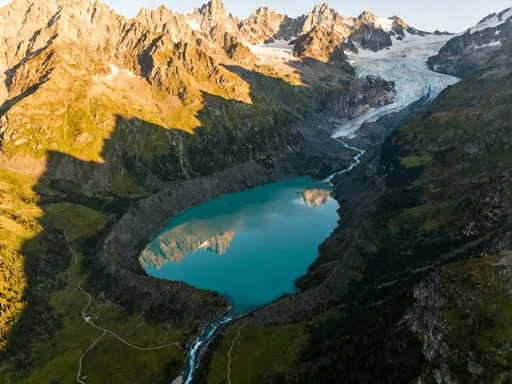
Lake Thun and Lake Brienz are often admired for their mirror-like surfaces and vivid hues, but their role extends far beyond aesthetics. These glacial lakes are active agents in shaping the landscape, influencing everything from local microclimates to transportation routes and agricultural patterns. Each lake has a distinct character: Lake Thun, with its deep sapphire tone, appears almost Mediterranean in summer light, while Lake Brienz shimmers in intense shades of emerald green, a result of fine rock flour suspended in its waters. This “glacial milk” comes from the constant grinding of ice against bedrock in the upper valleys, particularly those feeding into the Aare River system.
The difference in color is more than poetic — it reflects real hydrological contrasts. Lake Brienz, being steeper and narrower, receives a higher concentration of meltwater directly from the glaciers, which keeps its waters colder and more turbid. In contrast, Lake Thun has a larger volume and longer retention time, allowing sediments to settle and producing clearer, darker waters. These variations affect aquatic ecosystems, with Lake Thun supporting more diverse fish populations, including native trout and char, while Lake Brienz’s fast-flowing inlets create habitats for specialized invertebrates.
Seasonal fluctuations play a crucial role in how the lakes interact with the surrounding terrain. During spring and early summer, snowmelt causes water levels to rise significantly, sometimes flooding low-lying paths along the shoreline. Trails like the one from Interlaken Ost to Unterseen may be partially submerged, redirecting hikers inland. Boat operators adjust schedules accordingly, and some docking points are designed with floating platforms to accommodate changing levels. Observant travelers can witness these shifts firsthand during a scenic cruise — noticing how the waterline creeps up tree trunks or exposes new gravel banks as levels recede in autumn.
Local agriculture also depends on the lakes’ rhythms. Farmers in the lower Hasli Valley use lake-fed irrigation channels to water pastures, timing their hay harvests around expected water availability. The moderating effect of the lakes’ thermal mass helps extend the growing season, protecting crops from early frosts. Orchards of apple and cherry trees thrive along the northern shores, benefiting from the reflected sunlight and stable temperatures. Visitors can sample these regional specialties at weekly markets in Interlaken, where fresh fruit, honey, and dairy products speak to the deep connection between land, water, and livelihood.
For those seeking a closer understanding of the lakes’ influence, guided kayak tours offer an intimate perspective. Paddling near the mouth of the Lütschine River, one can see sediment plumes mixing into the main body of Lake Brienz, a visible sign of ongoing geological activity. Evening cruises reveal how the lakes absorb and re-radiate heat, creating gentle breezes that ripple across the surface long after sunset. These experiences go beyond sightseeing — they allow travelers to feel the pulse of a living landscape, shaped continuously by water in motion.
Mountains That Challenge Perception
Rising above Interlaken like sentinels of stone and ice, the Eiger, Mönch, and Jungfrau form one of the most iconic mountain trios in the world. Their names resonate with climbers and dreamers alike, but beyond fame, these peaks represent some of the most formidable geological structures in the Alps. The Eiger North Face, known as the “Murder Wall,” ascends over 1,800 meters in near-vertical rock and ice, a formation created by millions of years of tectonic compression and glacial erosion. This sheer wall does more than dominate the skyline — it shapes weather patterns, traps snow, and generates its own microclimate, often cloaked in clouds while the valley below enjoys sunshine.
The trio stands as a natural fortress, blocking moist air masses from the Atlantic and forcing them to rise, cool, and release precipitation — a phenomenon known as orographic lift. This makes the region around Lauterbrunnen one of the wettest in Switzerland, feeding its famous waterfalls and sustaining lush vegetation. The high altitude and extreme conditions have led to the development of specialized alpine flora, including moss campion and edelweiss, which cling to rocky crevices and bloom briefly during the short summer. These adaptations underscore the resilience required to survive in such an environment.
While summiting these peaks remains the domain of elite mountaineers, the average traveler can still experience their grandeur through carefully designed access points. The Jungfraujoch railway station, Europe’s highest at 3,454 meters, offers panoramic views without requiring technical climbing skills. Travelers board the train in Kleine Scheidegg, ascending through a tunnel carved directly into the Eiger’s flank. Along the way, viewing windows reveal the mountain’s internal structure — layers of gneiss and quartzite folded under immense pressure. Upon arrival, visitors step into a world of eternal snow, where the Aletsch Glacier — the longest in the Alps — stretches over 23 kilometers into the distance.
Another accessible vantage is the Schynige Platte railway, a historic cogwheel train that climbs from Wilderswil to an elevation of 1,967 meters. The journey unfolds through alpine meadows bursting with wildflowers in June and July, offering photo opportunities at every turn. At the summit, the panorama includes not only the三大 peaks but also a sweeping view of Lake Thun and the Bernese Oberland. A well-maintained trail leads to the Alpine Garden, which showcases over 600 native plant species, many labeled for educational purposes. These engineered pathways ensure that awe-inspiring experiences are available to families, seniors, and those with moderate mobility, promoting inclusivity without compromising safety.
Safety and sustainability are central to how these high-altitude sites are managed. Strict visitor limits are enforced at Jungfraujoch to prevent overcrowding and minimize environmental impact. Waste is carefully removed, and heating systems rely on energy-efficient designs to reduce carbon emissions. Guides emphasize Leave No Trace principles, reminding tourists that even a single footprint on fragile vegetation can take decades to heal. By balancing accessibility with preservation, Interlaken ensures that future generations will continue to stand in wonder beneath these ancient giants.
Valleys Where Nature Reclaims the Edge
Just a short train ride from Interlaken lies the Lauterbrunnen Valley, a place where nature’s raw power is on full display. Carved by glaciers during the last ice age, this U-shaped valley drops steeply from surrounding peaks, its walls streaked with no fewer than 72 waterfalls. The most famous, Staubbach Falls, plunges 297 meters in a delicate arc, often dispersing into mist before reaching the valley floor. This ethereal quality inspired poets like Goethe and Lord Byron, who saw in it a symbol of nature’s sublime beauty. Today, hikers following the trail from Lauterbrunnen village to Stechelberg pass beneath thundering cascades and through meadows carpeted with buttercups and gentians.
The valley’s glacial origins are evident in its smooth, rounded contours and the presence of hanging valleys — smaller side canyons suspended high above the main floor. These were once tributary glaciers that couldn’t erode as deeply as the primary ice stream, leaving their outlets perched dramatically above the landscape. When heavy rain or snowmelt occurs, temporary waterfalls erupt from these perches, transforming the valley into a dynamic network of flowing water. The Trümmelbach Falls, hidden within the mountain, are a prime example — ten cascades enclosed in rock, accessible via tunnels and elevators, their roar audible long before they’re seen.
Equally compelling is the Haslital Valley, which extends eastward from Meiringen into the heart of the Alps. Less visited than Lauterbrunnen, it offers a quieter, more introspective experience. The valley follows the course of the Aare River, which cuts through gorges and broadens into serene pools flanked by pine forests. Hiking routes like the one to Grosse Scheidegg reward travelers with panoramic views of untouched wilderness. In late summer, the high pastures come alive with the sound of cowbells as herders bring livestock to graze — a tradition known as alpine transhumance that has shaped the region’s culture for centuries.
These valleys are not just scenic escapes; they are sanctuaries of ecological recovery. After decades of limited human intervention, native species are reclaiming their habitats. Birds such as the golden eagle and black woodpecker have returned, while marmots sun themselves on rocky outcrops, whistling warnings to their colonies. Conservation efforts focus on maintaining biodiversity by restricting development and promoting eco-friendly tourism. Trails are constructed with permeable materials to prevent erosion, and signage encourages respectful behavior around wildlife. For visitors seeking authenticity, these valleys offer a rare chance to walk where the rhythm of life is still dictated by seasons, not schedules.
Adventure Built on Natural Structure
Interlaken’s global reputation as an adventure capital is no accident — it is rooted directly in the region’s unique topography. The convergence of lakes, mountains, and wind patterns creates ideal conditions for activities that harness the natural environment. Paragliding, perhaps the most iconic, thrives here due to thermal updrafts generated by the sun warming the valley floor and adjacent slopes. Pilots launch from Beatenberg or Schynige Platte, catching air currents that carry them in sweeping arcs over Lake Thun. The experience is both exhilarating and serene, offering a bird’s-eye view of forests, villages, and distant peaks.
Canyoning, another popular pursuit, takes advantage of the steep gorges formed by glacial meltwater and spring runoff. Routes like those in the nearby Schlieregg or Saxeten valleys guide participants through narrow passages, down natural rock slides, and into deep plunge pools. These journeys follow ancient waterways, revealing hidden chambers and moss-covered walls that few ever see. Professional outfitters provide helmets, wetsuits, and ropes, ensuring safety while preserving the sense of discovery. The activity is not about conquering nature, but moving through it with respect and awareness.
Via ferrata routes — protected climbing paths with fixed cables and ladders — are integrated into the rock faces of mountains like the Seilpark Interlaken and the Gimmelwald cliffs. These installations allow climbers of varying skill levels to ascend dramatic terrain without requiring advanced mountaineering experience. Each platform offers a new perspective, whether it’s a close-up of crystalline rock formations or a sweeping vista of the valley below. The design respects the natural contours, minimizing visual and environmental impact.
What unites these adventures is their deep connection to the land. They are not artificial attractions but responses to the terrain’s inherent opportunities. Operators emphasize environmental stewardship, requiring participants to follow strict guidelines and often contributing to local conservation funds. Briefings include lessons on alpine safety, weather awareness, and minimizing disturbance to wildlife. In this way, adventure becomes a form of engagement — a way to understand and appreciate the forces that shaped this extraordinary place.
How to Move Through the Terrain Wisely
Navigating Interlaken’s varied terrain requires preparation, awareness, and respect for nature’s unpredictability. Elevation changes can be deceiving — a trail that appears short on a map may involve significant ascent, and weather can shift rapidly, especially at higher altitudes. A sunny morning in Interlaken can give way to fog, wind, or even snow on the mountain passes by afternoon. Travelers are advised to check forecasts daily using reliable sources such as the Swiss Meteorological Service or the MeteoSwiss app, which provides real-time updates and avalanche risk assessments during winter months.
Proper gear is essential. Sturdy hiking boots with ankle support are recommended for all but the flattest paths, particularly on rocky or wet surfaces. Layered clothing allows for adjustment as temperatures fluctuate, and a waterproof jacket is non-negotiable, even in summer. Trekking poles can reduce strain on knees during descents and improve balance on uneven ground. Backpacks should include water, high-energy snacks, a first-aid kit, and a fully charged phone with offline maps downloaded — services like SwitzerlandMobility offer detailed trail information, including difficulty ratings and estimated durations.
Public transportation is one of the most efficient and sustainable ways to explore the region. The Swiss Travel System integrates trains, buses, boats, and cable cars into a seamless network. The Jungfrau Railways, for instance, connect Interlaken to remote villages and high-altitude stations with precision timing. Travelers using the Swiss Travel Pass enjoy unlimited access and discounts on mountain excursions, making it both economical and eco-friendly. Cable cars like the one to Harder Kulm provide quick access to panoramic viewpoints, reducing the need for long hikes while still offering breathtaking perspectives.
For those planning multi-day treks, such as the classic route from Lauterbrunnen to Mürren and back via Gimmelwald, booking mountain huts in advance is advisable. These lodges, operated by the Swiss Alpine Club, provide basic accommodations and warm meals, allowing hikers to travel light and immerse themselves fully in the landscape. Waste is strictly managed, and water is sourced from natural springs, treated on-site. By relying on established infrastructure, visitors minimize their footprint while maximizing safety and comfort.
Why This Landscape Stays With You
Interlaken’s terrain does more than impress — it imprints itself on the soul. It is not just the scale of the mountains or the clarity of the lakes that lingers, but the palpable sense of natural power. Standing at the base of the Eiger, one feels small in the best possible way — humbled by forces far greater than oneself. Listening to the roar of the Lütschine River, swollen with glacial melt, is to hear time itself in motion. Walking a high alpine pass at sunrise, when the first light ignites the snowcaps in golden fire, is to witness a daily miracle.
What makes this place unforgettable is not merely its beauty, but its authenticity. There are no artificial replicas, no staged experiences — only real rock, real water, real wind. Children laugh as they chase marmots across meadows; elders pause on benches to absorb the silence between mountain walls; couples sit by the lakeshore, speaking little, feeling much. In a world increasingly shaped by screens and speed, Interlaken offers something rare: a chance to slow down, to breathe deeply, and to reconnect with the Earth’s enduring rhythms.
This is not a destination to be checked off a list. It is a place to be felt, remembered, and returned to. Whether viewed from a train window, a kayak on the lake, or the summit of a mountain trail, Interlaken invites a deeper kind of seeing — one that goes beyond the eyes and into the heart. It reminds us that nature, at its most magnificent, is not just something we visit. It is something we belong to.