You Gotta See Sharjah’s Art Scene — This Is Next-Level Culture
I never expected Sharjah to hit me like it did. Beyond the quiet streets and golden deserts, there’s a creative pulse here that’s absolutely electric. I checked in not just to a city, but to a living gallery — where every alley, courtyard, and museum feels like a statement. From repurposed heritage houses to bold contemporary spaces, Sharjah’s art scene is real, raw, and deeply rooted in identity. This isn’t just tourism — it’s cultural immersion at its finest. The city unfolds slowly, revealing layers of history, tradition, and modern thought through visual storytelling that invites contemplation rather than consumption. It’s a place where art isn’t confined to white-walled rooms but breathes in the open air, shaping how residents and visitors alike experience urban life.
Arrival & First Impressions – A City That Thinks Differently
Stepping into Sharjah from neighboring emirates feels like shifting gears from high speed to a more deliberate rhythm. There are no towering skyscrapers piercing the sky, no flashing neon signs advertising luxury brands. Instead, the city greets visitors with wide boulevards lined with date palms, clean public spaces, and an atmosphere of calm intentionality. This restraint is not a lack of ambition — it is a reflection of values rooted in culture, education, and sustainability. Even before entering a single gallery, art reveals itself subtly: in hand-painted calligraphy on public walls, in sculptural benches shaped like traditional dhow boats, and in the careful restoration of old courtyard houses now serving as cultural hubs.
What strikes most about Sharjah upon arrival is how thoughtfully curated the urban experience feels. Unlike cities where development prioritizes economic visibility, Sharjah invests in meaning. Public spaces are designed not just for function but for engagement. A walk along Khalid Lagoon Corniche offers not only scenic views but also intermittent art installations — some temporary, others permanent — that respond to themes of nature, heritage, and community. These early encounters with creativity set the tone for a different kind of travel: one that encourages mindfulness, observation, and respect for context. For the discerning traveler, especially those seeking depth over dazzle, this quiet introduction becomes part of the journey’s appeal.
The city’s architectural language further reinforces this ethos. Buildings adhere to guidelines that emphasize harmony with the environment and cultural authenticity. Bright colors are used purposefully, often inspired by traditional Emirati textiles or desert landscapes. This visual coherence makes the moments when contemporary art breaks through all the more impactful. A vibrant mural in Al Zahiyah depicting abstract patterns based on henna designs doesn’t feel out of place — it feels like a natural evolution of expression. In this way, Sharjah teaches its visitors to look closer, to see art not as decoration but as dialogue.
The Heart of the Scene: Sharjah Art Foundation & the March Meeting
At the core of Sharjah’s artistic transformation stands the Sharjah Art Foundation (SAF), an institution that has played a pivotal role in positioning the emirate as a leader in contemporary art across the Middle East. Founded in 2009, SAF operates with a clear mission: to support artists, cultivate critical discourse, and make art accessible to diverse audiences. Its influence extends far beyond gallery walls — it shapes policy, supports educational programs, and fosters international collaboration. For any visitor interested in understanding the intellectual foundation of the city’s cultural rise, a visit to SAF’s headquarters in the Al Mureijah Art Spaces is essential.
One of the foundation’s most significant contributions is the annual March Meeting, a three-day gathering that brings together artists, curators, critics, and cultural practitioners from around the world. Held each spring, the event functions as both a symposium and a networking platform, focusing on themes relevant to artistic practice in the region and globally. Topics have ranged from decolonizing museum practices to exploring digital art in post-pandemic societies. While the meeting itself is invitation-only for professionals, its ripple effects are visible throughout the city — new collaborations emerge, exhibitions are conceived, and local artists gain exposure to global conversations. The energy during this period is palpable, even for casual visitors who may not attend sessions but notice increased activity in galleries and public spaces.
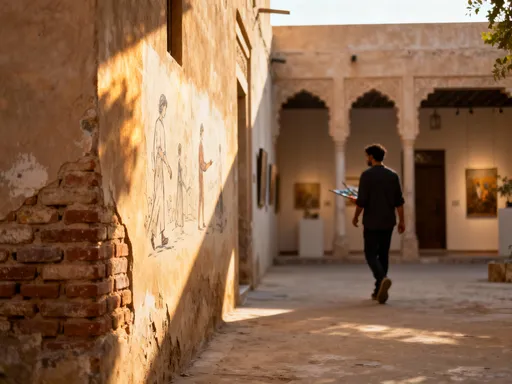
The Al Mureijah Art Spaces themselves are a testament to thoughtful urban regeneration. Housed in a cluster of restored mid-20th-century buildings, these galleries were once residential homes and commercial structures. Today, they form a pedestrian-friendly arts district where history and innovation coexist. During a guided tour, visitors can see how original architectural features — arched doorways, wind towers, and inner courtyards — have been preserved while adapting interiors for modern exhibition needs. One building hosts rotating solo shows by Emirati artists; another features experimental multimedia installations. The spaces are designed to feel intimate, encouraging close engagement rather than passive viewing. This human scale makes the art feel personal, immediate, and deeply connected to its surroundings.
Hidden in Plain Sight: Offbeat Galleries & Artist Studios
Beyond the well-known institutions lie a network of unconventional spaces that reveal another dimension of Sharjah’s creativity. Among the most intriguing is the Flying Saucer, a retro-futuristic structure originally built in the 1970s as a restaurant and later abandoned for decades. Restored and reopened by the Sharjah Art Foundation, it now serves as a non-commercial gallery showcasing experimental works by emerging artists. Its circular design and elevated form give it an otherworldly presence, making it a favorite subject for photographers and a symbol of the city’s ability to reimagine the past. Inside, the lighting is deliberately subdued, focusing attention on the artwork rather than the architecture — a quiet reminder that content matters more than spectacle.
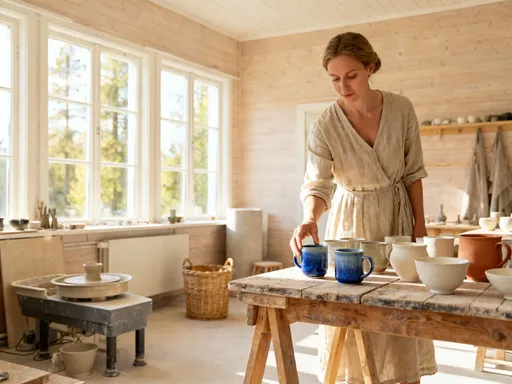
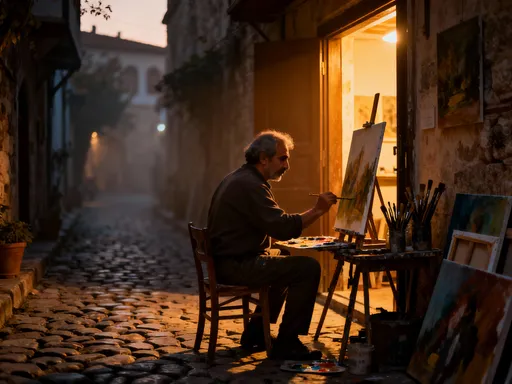
Equally compelling are the independent artist collectives scattered across neighborhoods like Al Jubail and Muwaileh. These grassroots studios often operate out of converted warehouses or small storefronts, offering a raw and authentic glimpse into the creative process. Many artists welcome visitors during designated open hours, particularly during Sharjah Art Week, when the entire city opens its doors to public participation. Walking through these spaces, one might find a painter layering symbolic motifs onto canvas, a ceramicist shaping vessels inspired by ancient pottery, or a textile artist weaving threads dyed with natural pigments. These interactions break down the barrier between creator and audience, fostering a sense of shared ownership over cultural production.
Visiting during Sharjah Art Week — typically held in October — offers a unique opportunity to experience the scene at its most dynamic. Galleries extend their hours, outdoor projections light up historic façades, and live performances take place in unexpected locations: a courtyard, a marketplace, even a parking lot. Temporary installations invite interaction — one year featured a sound-based piece where visitors could record messages in their native languages, creating a growing archive of voices. Such initiatives reflect a deep commitment to inclusivity and community engagement. For the art-focused traveler, timing a visit to coincide with this festival can transform a cultural tour into a participatory experience.
Museums With a Mission: Where Heritage Meets Modern Expression
Sharjah’s museum landscape exemplifies its dual commitment to preserving tradition and embracing innovation. The Sharjah Art Museum, located in the heart of the city, is one of the largest dedicated to contemporary art in the region. Its rotating exhibitions feature both regional and international artists, often curated around thematic explorations such as identity, migration, or environmental change. What sets it apart is its accessibility — wall texts are provided in both Arabic and English, audio guides are available, and staff members are trained to engage with visitors of all ages. School groups are common, indicating a strong emphasis on education as part of the museum’s mandate.
Equally significant is the Sharjah Heritage Museum, which underwent a major expansion in recent years to better represent the emirate’s social and cultural history. Rather than presenting artifacts behind glass, the museum uses immersive displays — recreated interiors of traditional homes, interactive screens showing oral histories, and sensory elements like scent and sound — to bring the past to life. Exhibits explore topics such as pearl diving, weaving, and Bedouin customs, connecting them to present-day practices. A section on Emirati women highlights their roles as educators, entrepreneurs, and keepers of tradition, offering a nuanced portrait of societal evolution.
What unites these institutions is a curatorial philosophy that avoids nostalgia in favor of relevance. Art and heritage are not treated as relics of the past but as living systems that continue to evolve. For example, a recent exhibition at the Sharjah Calligraphy Museum paired classical Islamic scripts with digital animations, demonstrating how ancient forms can find new expression through technology. Another show at the Bait Al Naboodah heritage house explored climate resilience through traditional building techniques, linking historical knowledge to contemporary sustainability challenges. These thoughtful juxtapositions make the museums not just places of learning, but catalysts for reflection on current issues.
Public Art as Urban Dialogue: Murals, Sculptures & Shared Spaces
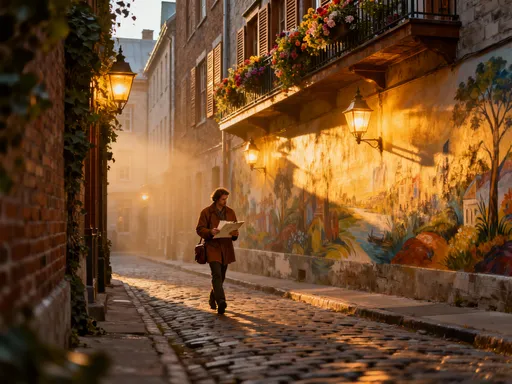
In Sharjah, art does not wait to be discovered behind gates — it meets people where they live, work, and move through the city. Neighborhoods like Al Majarrah and Al Zahiyah have become open-air galleries, where murals cover building façades and sculptures occupy roundabouts and park entrances. These works are not random embellishments; they are carefully commissioned projects that respond to local identity, history, and social concerns. A large-scale mural in Al Majarrah depicts a mosaic of faces representing the city’s diverse population, celebrating unity in diversity. Another in Al Zahiyah uses geometric patterns derived from Islamic architecture to create an optical illusion that shifts as viewers walk past, symbolizing the fluidity of perception.
One of the most talked-about public installations is a series of bronze sculptures placed along the Sharjah Creek promenade. Titled 'The Fishermen', the figures depict men in traditional dress casting nets into the water — a tribute to the emirate’s maritime roots. Positioned at eye level, the sculptures invite interaction; children often climb onto them, unaware they’re engaging with art. This accessibility is intentional: public art in Sharjah is meant to be lived with, not just observed from a distance. It fosters a sense of pride among residents, who see their stories reflected in the urban fabric.
Themes of sustainability and memory recur throughout the public art program. An installation in a community garden uses recycled metal to form abstract trees, drawing attention to environmental stewardship. Another project involved collecting handwritten letters from elders recounting memories of life before oil, then translating those texts into light projections on building walls during Ramadan. These initiatives show how art can serve as a bridge between generations and a tool for collective remembering. For visitors, walking through these neighborhoods becomes an act of discovery — each corner holds a new story, a new perspective, a new way of seeing.
Practical Tips for the Art-Focused Traveler
Planning a visit to Sharjah’s art scene requires some strategic thinking, especially for those who want to experience the city at its most vibrant. The best time to visit is between October and April, when temperatures are mild and outdoor activities are comfortable. This period also coincides with several key events, including Sharjah Art Week and the March Meeting, both of which draw international attention. If possible, aim to arrive mid-week, as weekends tend to be busier with local families enjoying leisure time. Thursdays and Fridays are official weekend days in the UAE, so many galleries host special programs or extended hours during this window.
Getting around the city is relatively easy, and the compact nature of the arts district makes walking a viable option for much of the central area. Comfortable shoes are recommended, as are sun hats and water bottles, especially during daylight hours. For longer distances, local taxis are affordable and reliable, and drivers are generally familiar with major cultural sites. In recent years, the Sharjah Tourism Department has introduced a cultural shuttle service that connects key museums, galleries, and heritage areas on a fixed route. This air-conditioned bus runs every hour and offers multilingual audio commentary, making it a convenient and informative way to navigate the city.
To fully appreciate the rhythm of Sharjah’s creative life, consider pairing gallery visits with low-key cultural experiences. The Arts Area, near the Al Mureijah Square, is home to several heritage-style cafes serving Arabic coffee and dates — perfect for a midday break. Independent bookshops stock titles on regional art, history, and literature, often hosting small readings or signings. Some travelers enjoy ending their day at the Sharjah Institute for Heritage, where evening performances of traditional music and dance are occasionally held. These moments of quiet connection deepen the overall experience, allowing visitors to absorb the city’s spirit beyond its visual offerings.
Why Sharjah Changes the Way You See the Gulf
Sharjah challenges the dominant narrative of the Gulf region as a landscape defined by rapid urbanization and luxury consumption. While other cities showcase architectural marvels and high-end shopping, Sharjah asserts a different kind of ambition — one rooted in intellectual inquiry, cultural preservation, and artistic experimentation. Its recognition as a UNESCO World Book Capital in 2019 and its repeated designation as the Cultural Capital of the Arab World underscore a long-term vision that prioritizes knowledge and creativity over spectacle. This isn’t a city chasing global attention through size or speed; it’s building influence through substance and sincerity.
What makes Sharjah particularly compelling is how seamlessly it integrates art into the everyday. Galleries are not isolated enclaves for the elite but accessible spaces embedded in neighborhoods, schools, and public institutions. Artists are not distant figures but visible participants in community life. This democratization of culture ensures that artistic expression remains grounded in social reality rather than abstract theory. For travelers accustomed to seeing art as a tourist attraction, Sharjah offers a recalibration — a reminder that creativity thrives best when it serves people, not just markets.
Moreover, the city’s approach offers a model for sustainable cultural development. By repurposing historic buildings instead of demolishing them, investing in local talent instead of importing foreign names, and focusing on education alongside exhibition, Sharjah demonstrates that cultural growth doesn’t require erasing the past. Instead, it shows how tradition can be a foundation for innovation. This balance resonates deeply with visitors seeking authenticity in an age of homogenized travel experiences. To walk through Sharjah is to witness a society engaged in a continuous conversation with itself — asking questions, preserving memories, and imagining futures through the language of art.
Sharjah doesn’t shout — it speaks with intention. Its art spaces aren’t just places to visit; they’re invitations to listen, reflect, and understand. In a region often seen through the lens of rapid modernization, Sharjah offers something quieter but far more powerful: a culture in full conversation with itself. For travelers seeking substance over spectacle, this city is a revelation — one brushstroke, one sculpture, one transformed courtyard at a time.