You Won’t Believe What I Found in Quebec — Art Everywhere, Seriously
Stepping into Quebec feels like walking through an open-air gallery where history, color, and creativity collide. I didn’t expect to be greeted by mural-covered alleyways, candlelit chapels with golden carvings, or street performers turning sidewalks into stages. This city doesn’t just preserve culture — it lives it. From the cobblestone charm of Old Quebec to the bold contemporary galleries downtown, every corner tells a story. If you’re chasing authentic art and soul-stirring moments, this is where you need to be.
First Impressions: A City That Feels Like a Living Museum
Arriving in Quebec City is like stepping into a European postcard that somehow drifted across the Atlantic and took root in North America. The first sight of the stone fortifications, the turrets of the Château Frontenac rising above the St. Lawrence River, and the soft hum of French conversation set the tone for what follows — a deeply sensory and artistic experience. Unlike cities where art is confined to museums, Quebec integrates creativity into the very fabric of daily life. Bilingual street signs blend practicality with cultural duality, while wrought-iron balconies, flower boxes bursting with geraniums, and artisanal bakeries with hand-painted awnings suggest a community that values beauty in the everyday.
Old Quebec, designated a UNESCO World Heritage site in 1985, is one of the best-preserved colonial cities in North America. Its distinction lies not only in architectural conservation but in how seamlessly the past and present coexist. The city’s commitment to cultural continuity means that restoration projects maintain original design elements while allowing space for modern artistic expression. Walking through the gates of the fortified city, visitors encounter not just history, but a living environment where art isn’t observed from a distance — it’s lived, touched, and celebrated in public squares, doorways, and even manhole covers decorated with local motifs.
Even the pace of life encourages mindfulness and appreciation. There are no towering glass skyscrapers to disrupt the skyline; instead, the vertical rhythm is set by church steeples and historic rooftops. This deliberate preservation allows the city’s artistic character to shine without competition from modern urban clutter. For a 30- to 55-year-old traveler — often balancing family, work, and the desire for meaningful experiences — Quebec offers a rare kind of respite: a place where beauty is accessible, not curated behind velvet ropes, and where every turn reveals a new layer of craftsmanship and cultural pride.
Old Quebec: Where History Paints the Streets
The heart of Quebec’s artistic soul beats strongest in Old Quebec, particularly in the Quartier Petit-Champlain and Place Royale. These areas are not just tourist destinations; they are neighborhoods where residents walk their dogs past centuries-old stone walls and where café owners sweep flower petals from their doorsteps each morning. The narrow, winding streets are lined with buildings that date back to the 17th and 18th centuries, their facades preserved with meticulous care. Yet, rather than feeling like a museum piece, the district feels vibrant and alive, thanks in large part to the way art is woven into its daily rhythm.
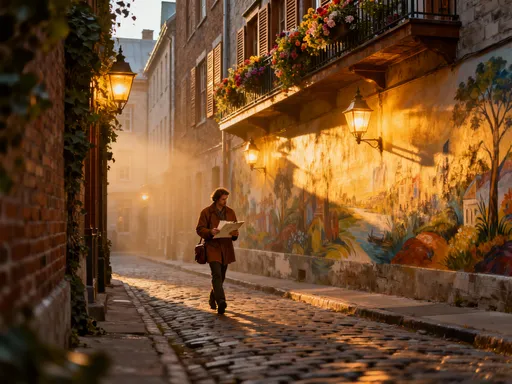
Place Royale, often called the birthplace of French America, is a cobblestone square surrounded by reconstructed colonial buildings. Today, it hosts local artisans who display handcrafted jewelry, wool scarves, and painted ceramics in open-air stalls. The square itself is a canvas — in summer, it’s shaded by leafy trees and animated by the melodies of violinists and accordion players; in winter, it’s dusted with snow and illuminated by warm golden lights that reflect off the ice-covered river. The gaslit lamps, restored to their original 19th-century design, add a romantic glow, while flower-filled window boxes maintain a sense of domestic care and beauty.
Throughout the district, small artistic details reward the observant traveler. Hand-painted signs above boutiques and bistros are often done in calligraphy or vintage typography, a nod to pre-digital craftsmanship. Seasonal installations — such as hand-carved wooden nativity scenes in December or floral mosaics in July — reflect the city’s ongoing dialogue between tradition and creativity. Even the funicular that connects Lower Town to Upper Town features glass panels etched with historical scenes, turning a simple ride into a mini-exhibition. For visitors, especially women who appreciate thoughtful design and cultural authenticity, these details create a sense of connection — not just to a place, but to a way of life that values patience, beauty, and community.
The Murals: When Walls Speak Volumes
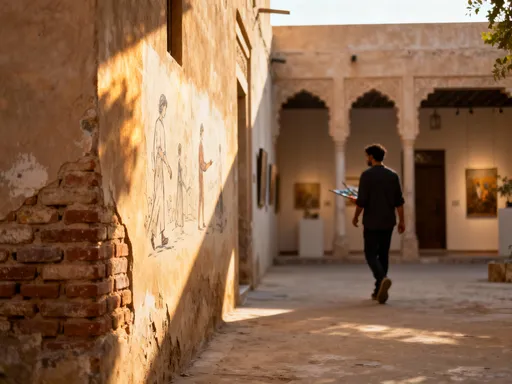
One of Quebec City’s most striking artistic features is its mural art — vast, colorful compositions that transform blank walls into vivid storytellers. Unlike graffiti, which may feel transient or rebellious, these murals are commissioned, celebrated, and deeply embedded in the city’s cultural identity. The most famous of these is the Fresque des Québécois, a 110-meter-long masterpiece painted on the side of a building along Rue du Petit-Champlain. Completed in 1999, it depicts over 20 historical figures and everyday citizens from Quebec’s past, from Samuel de Champlain to a 19th-century fisherman, all rendered in rich, lifelike detail.
What makes this mural so powerful is not just its scale, but its narrative depth. It doesn’t merely decorate a wall — it tells the story of a people, their struggles, their resilience, and their joys. Children point at figures they recognize from school, while older visitors pause to reflect on ancestors who may have lived through the same eras. The mural is also a testament to technical artistry, using perspective tricks to make flat surfaces appear three-dimensional, creating the illusion that the figures are standing on balconies or leaning out of windows.
But the mural magic doesn’t stop there. Scattered throughout the city, especially in the Saint-Roch and Limoilou neighborhoods, are dozens of smaller, often unexpected murals. These hidden works appear on the sides of bakeries, behind schools, and in alleyways that might otherwise go unnoticed. One depicts a young girl releasing a paper boat into a painted stream; another shows a tree whose branches morph into musical notes. These pieces invite slow exploration and reward curiosity. They also reflect a city-wide commitment to public art — supported by municipal programs that fund local artists and encourage community involvement in design.
For the traveler, discovering these murals becomes a kind of treasure hunt, a way to engage with the city beyond typical sightseeing. Each one offers a moment of pause, a chance to reflect on history, identity, and imagination. And for those who value emotional resonance in travel, these walls — silent yet expressive — become unexpected companions on the journey.
Galleries Beyond the Obvious: Hidden Cultural Gems
While Quebec’s outdoor art captivates at every turn, its indoor institutions offer equally profound experiences. Two standouts are the Musée de la Civilisation and the Musée National des Beaux-Arts du Québec, both of which combine world-class curation with deeply human storytelling. These are not sterile, hushed spaces where art is kept at a distance. Instead, they are dynamic, accessible, and thoughtfully designed to engage visitors of all ages and backgrounds.
The Musée de la Civilisation, located in the heart of Old Quebec, is renowned for its immersive and often interactive exhibitions. One recent display explored the cultural significance of childhood across generations, featuring vintage toys, family photographs, and audio recordings of grandparents’ memories. Another powerful exhibit highlighted Indigenous traditions, presenting wampum belts, birchbark canoes, and contemporary First Nations artwork in a way that honored both historical depth and living culture. The museum’s approach is narrative-driven, guiding visitors through emotional and intellectual journeys rather than simply presenting artifacts behind glass.
Equally compelling is the Musée National des Beaux-Arts du Québec (MNBAQ), situated in a park-like setting just outside the old city walls. The museum’s permanent collection includes works by Quebec’s most celebrated artists, such as Jean Paul Riopelle and Clarence Gagnon, whose landscapes capture the province’s rugged beauty and seasonal contrasts. The building itself is a work of art, blending neoclassical architecture with modern expansions that flood galleries with natural light. Rotating contemporary exhibitions ensure that no two visits are the same — one season might feature abstract textile art, while the next showcases digital installations that respond to viewer movement.
For practical travelers, both museums offer timed entry, online ticketing, and quiet hours on certain weekdays — ideal for those who prefer a more contemplative experience. Audio guides are available in multiple languages, and family-friendly activities make these spaces welcoming for intergenerational visits. Whether you’re drawn to historical artifacts, Indigenous art, or bold modern expressions, these galleries deepen your understanding of Quebec’s identity — not as a static relic, but as a culture in constant, creative motion.
Festivals That Turn the City Into a Stage
Quebec’s artistic spirit reaches its peak during its seasonal festivals, when the entire city becomes a stage for music, performance, and public celebration. These events are not peripheral attractions — they are central to the city’s cultural rhythm, drawing locals and visitors alike into shared experiences of joy, creativity, and community. Two of the most renowned are the Quebec Winter Carnival and the Festival d’Été de Québec, each transforming the urban landscape in dramatically different, yet equally captivating, ways.
The Quebec Winter Carnival, held every February, is one of the largest winter festivals in the world. Centered around the iconic Ice Palace — a grand structure made entirely of ice blocks — the carnival turns the city into a wonderland of light and activity. Nighttime illuminations turn snow sculptures into glowing sculptures, while parades feature Bonhomme Carnaval, the festival’s cheerful snowman ambassador, dancing through the streets. Brass bands play in the plazas, their music echoing off frozen riverbanks, and families gather to try traditional winter treats like maple taffy poured on snow. The atmosphere is one of warmth, despite the cold — a testament to Quebec’s ability to find joy and beauty in every season.
In contrast, the Festival d’Été de Québec, held each July, unleashes a wave of energy across the city’s parks and stages. Over ten days, more than 300 performances take place, ranging from international rock acts to local folk ensembles. The main stage on the Plains of Abraham draws massive crowds, but some of the most memorable moments happen in smaller settings — a jazz trio playing under a canopy of trees, a street theater troupe performing a silent comedy for laughing children, or a poet reciting verses in a candlelit courtyard. The festival’s inclusive spirit means that much of the programming is free, ensuring that art remains accessible to all.
For the 30- to 55-year-old traveler, these festivals offer more than entertainment — they provide a window into the soul of Quebec. They reveal a culture that values togetherness, resilience, and the courage to celebrate life openly and passionately. Whether wrapped in a wool coat or basking in summer sun, participants become part of something larger — a living tradition of artistic expression that transcends age, language, and background.
Local Creativity: Meeting Artists and Makers
Beyond the festivals and museums, Quebec’s creative energy thrives in its studios, markets, and neighborhoods. Places like the Marché du Vieux-Port and the Saint-Roch district offer intimate encounters with the people behind the art. These are not souvenir shops filled with mass-produced trinkets, but spaces where craftsmanship is honored, and stories are shared with pride.
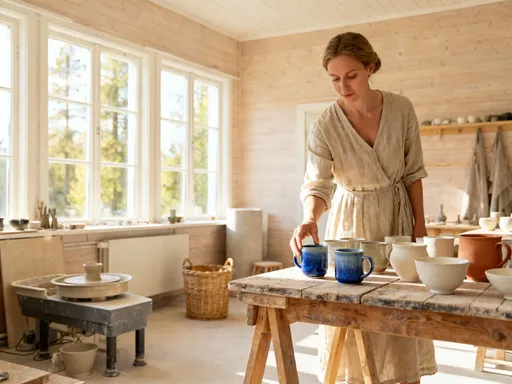
The Marché du Vieux-Port, open year-round, is a hub for local producers and artisans. Here, visitors can browse handmade soaps infused with lavender from nearby farms, hand-thrown ceramic mugs glazed in earthy tones, and woolen throws woven using traditional patterns. Many vendors are the creators themselves, happy to explain their process — the time it takes to fire a pot, the inspiration behind a textile design, or the generations of family knowledge behind a recipe. These interactions add a personal dimension to shopping, transforming it from transaction to connection.
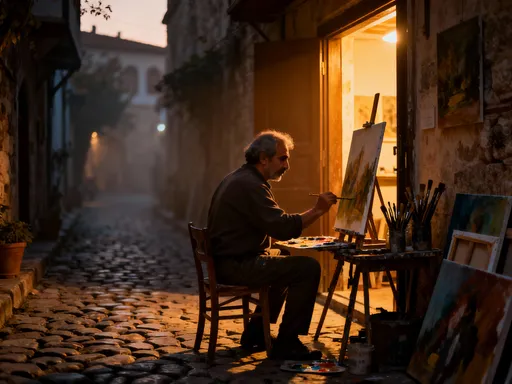
Saint-Roch, once an industrial district, has emerged as Quebec’s creative epicenter. Former factories now house artist studios, independent galleries, and design boutiques. A walk through the neighborhood might lead to an open studio event, where painters invite passersby to watch them work, or a pop-up exhibition in a converted warehouse. The area also supports female artists and entrepreneurs, with several cooperatives led by women in fields ranging from printmaking to sustainable fashion.
What unites these creators is a distinct artistic voice shaped by Quebec’s Francophone identity. Their work often blends European elegance — seen in fine brushwork or delicate embroidery — with North American boldness, expressed through vibrant colors, experimental forms, or socially conscious themes. This fusion creates a unique aesthetic that feels both familiar and refreshing. For travelers who value authenticity and craftsmanship, meeting these artists offers a deeper understanding of Quebec not just as a destination, but as a living culture of making and meaning.
How to Experience Quebec’s Culture Like a True Insider
To truly absorb Quebec’s artistic richness, it helps to move beyond checklists and embrace a slower, more intentional rhythm. The city rewards those who wander without urgency, who pause to read a plaque, chat with a shopkeeper, or sit on a bench to watch light shift across a stone wall. For the thoughtful traveler, especially women seeking meaningful, enriching experiences, a few simple strategies can transform a visit from sightseeing to soul-stirring.
Begin with a walking route that connects key art spots. Start in Place Royale, then follow Rue du Petit-Champlain up to the funicular, where you’ll find the Fresque des Québécois. From there, walk through the Upper Town, passing the Notre-Dame-des-Victoires Church and the artists’ stalls in Place d’Youville. Continue to the Musée de la Civilisation, and end the day at the Plains of Abraham, where public art installations often blend seamlessly with nature. This loop covers history, public art, and green space — a balanced immersion in Quebec’s cultural layers.
Timing matters. Visit galleries early in the morning or on weekday afternoons to avoid crowds. Explore outdoor murals in the late afternoon, when sunlight enhances colors and shadows add depth. Early risers will enjoy the quiet beauty of empty cobblestone streets, while evening explorers can savor the city’s magical illumination after dark.
Use public transit or walk whenever possible — not only is it eco-friendly, but it allows for spontaneous discoveries. A bus ride might reveal a mural on a school wall; a detour down an unknown lane could lead to a tiny gallery hosting a local exhibition. Pair cultural stops with quiet moments: enjoy a café au lait in a book-filled bistro near the MNBAQ, or sip herbal tea in a garden courtyard after a museum visit. These pauses allow the day’s impressions to settle, creating space for reflection and emotional connection.
Finally, engage with the language. While most locals speak English, attempting a few phrases in French — “Bonjour,” “Merci,” “C’est magnifique” — opens doors and deepens interactions. It signals respect and curiosity, qualities that resonate deeply in a city that guards its cultural identity with pride.
Conclusion: Why Quebec Stays With You Long After You Leave
Quebec is not a city that fades from memory. Its art, embedded in stone, paint, music, and daily life, lingers in the mind long after the journey ends. It’s not just the grandeur of the Château Frontenac or the scale of the murals that leaves an impression — it’s the feeling of being surrounded by a culture that values beauty, history, and human connection. For the 30- to 55-year-old woman traveler, often navigating complex roles and responsibilities, Quebec offers a rare gift: the chance to slow down, to see deeply, and to remember that art is not a luxury, but a vital part of living well.
This city teaches that culture is not something to be consumed quickly, but something to be lived slowly. It invites you to walk its streets with curiosity, to listen to its stories, and to find your own reflections in its walls and windows. It reminds us that creativity thrives not in isolation, but in community — in the shared joy of a festival, the pride of a local maker, the silence before a powerful painting.
So if you’re seeking a destination that nourishes the spirit as much as the eye, let Quebec be your next chapter. Don’t rush. Don’t just look — observe. Don’t just visit — connect. Let the city reveal itself in its quiet moments and bold expressions. Because in Quebec, art isn’t just everywhere — it’s alive, and waiting to speak to you.