You Won’t Believe These Hidden Viewpoints in Kamakura
Kamakura isn’t just about temples and coastlines—it’s a city that reveals its soul from above. I wandered beyond the usual paths and stumbled upon silent hilltops, ocean-blanketed cliffs, and bamboo-framed outlooks that stole my breath. These aren’t the crowded spots you see on postcards. They’re real, raw, and quietly breathtaking. If you're looking for moments that feel like yours alone, these viewpoints deliver. Let me take you where the guidebooks don’t.
The Magic of Seeing Kamakura from Above
Elevation transforms Kamakura. From ground level, the city unfolds in fragments—stone lanterns half-hidden in moss, narrow lanes lined with family-run shops, the distant chime of temple bells. But climb just a little higher, and the pieces come together like a puzzle completing itself. The forest spills down the hillsides in waves of green, meeting the silver curve of the sea. Houses nestle in the valleys like scattered tiles, and the rhythm of daily life—children walking to school, cyclists on errands, steam rising from a morning kitchen—becomes visible in gentle, human patterns. This shift in perspective isn’t just visual; it’s emotional. It offers a sense of calm, of clarity, of being both part of and apart from the world below.
What makes these high points so powerful is their ability to slow time. In a culture that often values efficiency and itinerary, Kamakura’s hidden viewpoints invite stillness. They ask you to pause, to breathe, to notice. You begin to see not just what is there, but how it connects—the way a temple roof aligns with a mountain ridge, how the tide shapes the coastline, how light changes the color of the trees with the hour. This is not tourism as checklist; it’s travel as immersion. And for women in their 30s to 55s, many of whom carry the quiet weight of daily responsibilities, these moments of elevation offer something rare: a chance to step outside the routine, to feel small in the best way, to be reminded of beauty that exists simply for being.
The sensory shift is immediate. The air is cooler, often carrying the faint scent of pine or damp earth. Birdsong replaces traffic noise. The wind moves freely here, brushing your skin with a touch that feels ancient and kind. You might hear only your breath, or the rustle of leaves, or the distant crash of waves far below. These details aren’t incidental—they are the essence of the experience. They ground you in the present, pulling you out of thought and into sensation. And in that space, something inside you settles. You’re not just visiting Kamakura. You’re feeling it.
Hiking the Ancient Pilgrimage Trails for Panoramic Rewards
Beneath Kamakura’s modern surface flows a network of old mountain paths, once trod by monks, pilgrims, and travelers seeking spiritual clarity. Today, these trails offer more than history—they deliver some of the most rewarding views in the region. The Daibutsu Trail, which links Kōtoku-in Temple to Hase Station, is often walked, but just beyond its well-trodden stones lie quieter branches that climb higher, deeper into the forest. These less-traveled routes, like the extension toward Hokke-dō or the loop behind Kamakura-gū, are where the real magic begins. Here, the path narrows, the trees close in, and the world softens.
Walking these trails is a sensory journey in itself. The ground is carpeted in moss and fallen leaves, muffling footsteps and creating a hush that feels almost sacred. Stone steps, worn smooth by centuries of use, rise gently through the trees. In spring, azaleas bloom in bursts of pink and red; in autumn, the maples turn the hillsides into a tapestry of gold and crimson. Bird calls echo from the canopy—warblers, woodpeckers, the occasional crow—adding rhythm to the silence. The air carries the clean scent of cedar and the damp richness of the forest floor. It’s easy to forget you’re near a city at all.
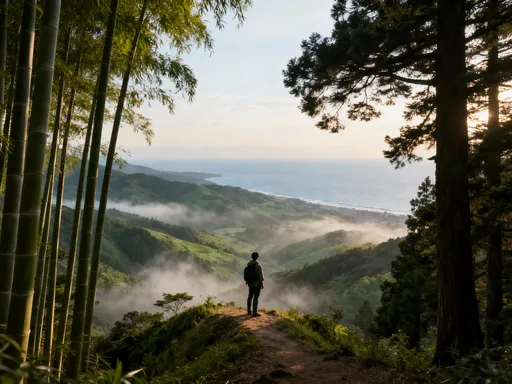
But the reward comes when the trees part. Suddenly, the valley opens below, revealing a sweeping view of terraced homes, temple roofs, and, in the distance, the glittering expanse of Sagami Bay. From these heights, the ocean looks like a sheet of hammered silver, shifting with the light. On clear days, Enoshima Island rises from the water like a myth made real. The contrast between the wildness of the trail and the serenity of the view is profound. You’ve earned this moment—not through speed or convenience, but through presence, through putting one foot in front of the other.
These trails are accessible to most fitness levels. The Daibutsu Trail itself takes about 30 to 40 minutes at a relaxed pace, but the side paths to higher viewpoints may add another 20 to 30 minutes of gentle climbing. Wear comfortable walking shoes, bring water, and allow time to linger. There are no guardrails or signs at many of these spots, which adds to their authenticity but requires attention to footing. And while you may see fellow hikers on the main trail, once you turn off onto the smaller paths, solitude is likely. This is not a place for crowds. It’s a place for those willing to wander a little further, to listen a little closer, to see a little deeper.
Meigetsu-in Temple’s Overlook: Serenity Above the Gardens
Meigetsu-in, often called the “Temple of Hydrangeas,” draws visitors each summer with its stunning display of blooms. But beyond the famous courtyard, few know of a quiet path that climbs behind the temple, leading to a secluded terrace with one of Kamakura’s most peaceful views. This upper trail begins near the rear gate, marked only by a simple wooden sign. As you ascend, the sound of visitors fades, replaced by the rustle of bamboo and the soft chirping of unseen birds. The path is narrow, flanked by tall grasses and ferns, and opens suddenly to a small stone platform shaded by a single ancient cedar.
From here, you look down not just on Meigetsu-in’s garden, but on the entire sweep of the valley. In early morning, when the sun rises behind you, the garden glows in soft golden light, the hydrangeas still damp with dew. Mist rises from the trees, curling like smoke between the hills. The view stretches beyond the temple walls, encompassing distant rooftops, patches of forest, and the faint blue line of the sea on the horizon. It’s a perspective that feels both intimate and expansive—like seeing a secret corner of the world from a place of quiet privilege.
What makes this spot so special is its contrast to the temple below. While the main courtyard can be crowded, especially in peak season, this overlook is almost always empty. It offers a moment of reflection, of stillness, of being alone with your thoughts. For many women who spend their days tending to others—children, parents, households—this kind of solitude is rare and precious. Here, there is no demand, no expectation. Just the breeze, the light, the sound of a single bell carried on the wind.
The climb is short—less than five minutes from the temple’s rear gate—but it feels like stepping into another world. Visit in the early hours, before 9 a.m., for the best light and the deepest quiet. Bring a light jacket; the breeze can be cool, even in summer. And take a moment to sit. This is not a viewpoint to rush through. It’s a place to breathe, to remember yourself, to feel the slow pulse of the earth beneath you.
The Secret Ridge Behind Kenchō-ji: Forest Light and Distant Views
Kenchō-ji, the largest and most important Zen temple in Kamakura, is a destination in itself. Its grand gate, serene gardens, and quiet halls draw visitors from around the world. But few venture beyond the main complex, where a narrow path winds up into the forest behind the main hall. This trail, barely marked and often overlooked, leads to a wooded bluff that offers one of the most meditative views in the city. The climb is gentle, the path lined with towering cedars that filter the sunlight into soft, dappled patterns on the ground. The air is cool and still, scented with resin and earth.
After about ten minutes of walking, the trees thin, and the ridge opens to a quiet clearing. Here, benches face east, toward the sea. The view is not dramatic in the usual sense—no cliffs, no sweeping panoramas—but it is deeply calming. You see layers of forested hills rolling toward the coast, with glimpses of Sagami Bay between the trees. On clear mornings, the water shimmers like mica. The distant hum of the city is absent. Instead, there is only the wind, the rustle of leaves, the occasional call of a jay.
What makes this place remarkable is its sense of seclusion. Despite being so close to one of Kamakura’s most visited temples, few tourists make it this far. It feels like a hidden sanctuary, a place where time slows and thoughts settle. This is the essence of Zen—not in doctrine, but in atmosphere. It’s easy to understand why monks once sought such spots for meditation. Here, the mind quiets naturally. There is nothing to do, nowhere else to be. Just the breath, the light, the stillness.
The path is safe and well-maintained, though uneven in places. It’s suitable for most walkers, but caution is advised in wet weather, as the stones can become slippery. Visit in the morning for the best light and solitude. And consider bringing a small notebook or journal. This is a place where ideas come gently, where memories surface, where the heart finds space to speak.
Zaimokuza Beach Cliffs: Where Ocean Meets Sky
While Zaimokuza Beach is known for surfing and seaside cafes, few visitors realize that just behind the shoreline, a series of low cliffs and elevated walkways offer stunning ocean views. These vantage points, accessible via quiet residential paths, rise just high enough to provide an uninterrupted eastern outlook. From here, the sea stretches to the horizon, meeting the sky in a seamless blend of blue and gold at sunrise. The waves roll in with a steady rhythm, curling and breaking in patterns that change with the tide. Seagulls glide on the breeze, their cries carried inland by the wind.
The best time to visit is early morning, when the beach is nearly empty and the light is soft and golden. The air carries the clean, briny scent of the ocean, mixed with the faint sweetness of blooming beach grass. You can watch surfers paddle out, their silhouettes dark against the rising sun. The sound of the waves is constant but not loud—a soothing, rhythmic presence that calms the mind. For women who carry the quiet stresses of daily life, this kind of sensory peace can feel like a gift.
These viewpoints are informal, often just widened paths or small resting areas with simple railings. There are no crowds, no vendors, no distractions. Just the sea, the sky, and the moment. Afterward, you can walk down to one of the beachside cafes—small, family-run spots serving matcha lattes, warm croissants, and local fish dishes. Sitting with a cup of tea, watching the day unfold, feels like part of the experience. It’s not luxury, but authenticity. It’s not spectacle, but simplicity.
These cliffs are easily accessible on foot from Kamakura or Zaimokuza stations, with clear but unmarked paths leading up from the beach. Wear comfortable shoes and bring a light windbreaker—the breeze can be strong, even on warm days. And take your time. This is not a place to rush. It’s a place to stand, to breathe, to remember that beauty doesn’t always need to be grand. Sometimes, it’s just the horizon, the light, and the quiet joy of being still.
Mount Kōfuku: Kamakura’s Overlook Crown
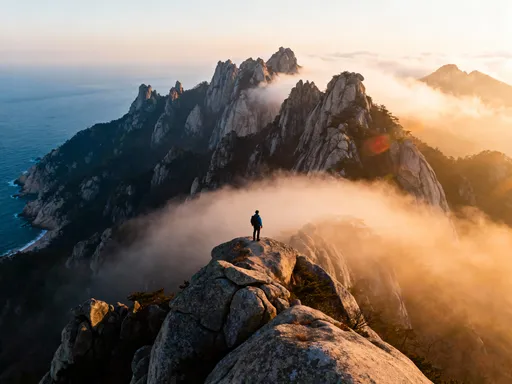
Rising at the northern edge of the city, Mount Kōfuku is Kamakura’s highest accessible viewpoint and its best-kept secret. At just 145 meters, it’s not a mountain by most standards, but its elevation delivers a 360-degree panorama that encompasses the entire region. To the south, you see the curve of Sagami Bay and the silhouette of Enoshima Island. To the north, the forested hills roll inland, dotted with temples and homes. On exceptionally clear days, the distant peak of Mount Fuji appears on the horizon, a pale blue dream against the sky.
The climb to the summit takes about 25 to 30 minutes from Hokke-dō, following a well-marked but rarely crowded trail. The path winds through dense forest, passing old stone markers and small shrines tucked into the trees. In spring, wildflowers bloom along the edges; in autumn, the air is crisp and the views are at their clearest. The trail is steady but not strenuous, with steps and switchbacks that make the ascent manageable. Along the way, there are small resting platforms where you can pause, catch your breath, and already begin to see glimpses of the landscape below.
When you reach the top, the view is worth every step. The Great Buddha Valley spreads out beneath you, with Kōtoku-in Temple nestled in the trees. You can trace the route of the Daibutsu Trail, see the red gates of Tsurugaoka Hachimangū, and watch boats moving along the coast. The sea glitters in the sunlight, and the city feels both close and distant, like a model village. There’s a small pavilion at the summit with benches, but many visitors simply stand at the railing, absorbing the scene in silence.
For those seeking a deeper connection, Mount Kōfuku offers more than scenery. It offers perspective. From this height, your worries feel smaller, your breath deeper, your sense of place clearer. It’s a reminder that life, like the view, is best understood from a distance. Bring water, a light snack, and a camera—but also bring stillness. Visit in the late afternoon to watch the sun dip toward the sea, painting the sky in hues of pink and gold. And when you descend, carry that calm with you. You’ve not just seen Kamakura. You’ve felt its heart.
Why Slow Viewing Beats Checklist Tourism
In an age of fast travel and packed itineraries, Kamakura’s hidden viewpoints offer a different kind of journey—one defined not by how many sights you see, but by how deeply you experience them. These elevated moments are not about ticking boxes. They are about pausing. About allowing yourself to be moved by light, by silence, by the simple fact of beauty. They remind us that travel is not just about going somewhere, but about becoming someone different in the process.
For women who often move through life at a relentless pace—balancing work, family, home—these quiet lookouts offer a rare gift: time. Time to breathe. Time to reflect. Time to remember what it feels like to be still. And in that stillness, a deeper connection emerges. Not just to Kamakura, but to yourself. You begin to see your own life with new clarity, as if from a distance. The things that felt overwhelming now seem manageable. The beauty you’ve overlooked comes into focus.
These viewpoints do more than show you a landscape. They change how you move through it. After standing on Mount Kōfuku at sunset, or watching the mist rise over Meigetsu-in’s garden, you walk through the city differently. You notice more. You listen more. You are present in a way that checklist tourism rarely allows. And that presence—full, quiet, intentional—is where true travel begins.
So the next time you visit Kamakura, don’t just follow the crowds. Step off the main path. Climb a little higher. Let the forest embrace you. Let the sea speak to you. Seek not just the sights, but the moments that linger—the ones that settle in your heart and stay with you long after you’ve returned home. Because the most beautiful views aren’t just seen. They’re felt. And in Kamakura, they’re waiting for you, quietly, just beyond the guidebooks.