Lost in Lanterns and Legends: My Hoi An Culture Fix
Walking through Hoi An feels like stepping into a living storybook—ancient wooden houses, golden lanterns glowing at dusk, and the scent of incense weaving through bustling alleyways. I came for the beaches but stayed for the soul of Vietnam. From lantern-making to ancestral rituals, every corner holds a cultural gem. This isn’t just sightseeing—it’s feeling history. Let me take you beyond the postcard spots to the real heartbeat of this UNESCO treasure.
First Impressions: Stepping into a Timeless Town
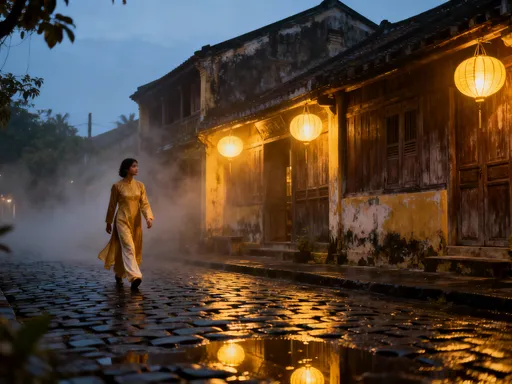
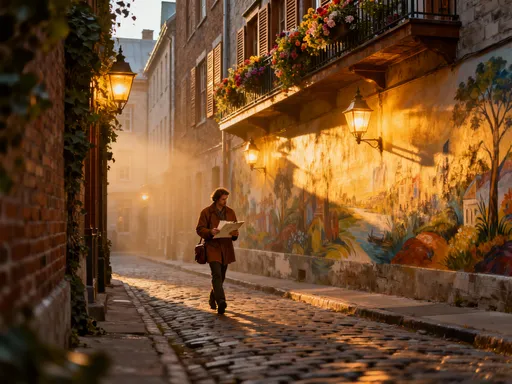
Hoi An does not announce itself with fanfare. There are no grand gates or towering signs declaring arrival. Instead, the town unfolds quietly, like a well-kept secret whispered from one traveler to the next. As you enter the Ancient Town, the first thing that strikes you is the color—soft ochre walls glowing under the tropical sun, shuttered windows painted in faded emerald and peeling coral. The streets are narrow, barely wide enough for a motorbike to pass, and lined with two- and three-story houses that lean slightly forward, as if sharing confidences across the alley.
This is not a reconstructed heritage site built for tourists. Hoi An’s charm lies in its authenticity. Designated a UNESCO World Heritage Site in 1999, the Ancient Town is one of Southeast Asia’s best-preserved trading ports, with a history stretching back to the 15th century. Its architecture tells a layered story—Vietnamese homes with Chinese tiled roofs, Japanese covered bridges, and French colonial facades with wrought-iron balconies. Each style speaks to the waves of merchants who once called this riverside settlement home: Cham traders, Chinese settlers, Japanese merchants, and later, French colonists.
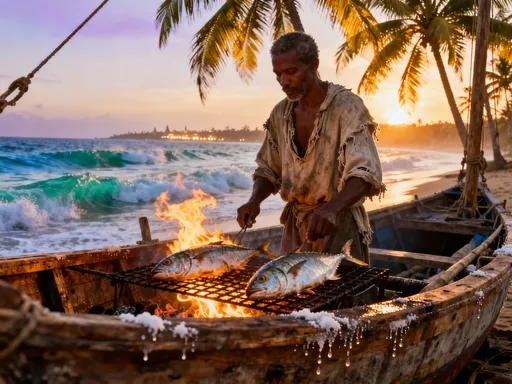
The Thu Bon River, which curves gently around the old quarter, was once the lifeblood of Hoi An’s prosperity. Ships from across Asia docked here to trade silk, spices, ceramics, and medicine. Today, the riverbanks are quieter, dotted with lantern-lit cafes and wooden sampans ferrying visitors to riverside restaurants. Yet the rhythm of life still pulses along the water. Fishermen mend their nets in the early morning light, and women in conical hats wash vegetables in the shallows, just as their ancestors did centuries ago.
What makes Hoi An truly special is how seamlessly the past and present coexist. Children ride bicycles past 300-year-old assembly halls. Elderly men sip coffee at sidewalk tables beneath hand-painted shop signs that have hung for generations. The town does not feel frozen in time—it feels alive, breathing history with every step. And unlike some heritage sites turned into open-air museums, Hoi An remains a lived-in community, where culture is not performed but practiced.
The Magic of the Full Moon Festival: More Than Just Pretty Lights
On the 14th night of each lunar month, Hoi An transforms. Motorbikes disappear from the streets. Generators fall silent. Electricity is dimmed to make way for something far older and more intimate: candlelight and lanterns. This is the Full Moon Festival, a monthly celebration that turns the Ancient Town into a dreamscape of floating light and quiet reverence.
Tourists often come for the beauty—the golden glow of hundreds of silk lanterns hanging from eaves and bridges, the shimmer of candle boats drifting down the river. But the festival is more than a photo opportunity. For locals, it is a time of remembrance, gratitude, and spiritual connection. Families gather at home altars to offer food, incense, and prayers to ancestors. Temples such as the Fujian Assembly Hall and Tan Ky House open their doors, and elders sit on wooden benches, sharing stories of Hoi An’s past with younger generations.
One evening, I watched a grandmother guide her granddaughter to the riverbank, helping her place a small lotus-shaped lantern into the water. The child whispered a wish, her hands folded in front of her chest. The grandmother smiled, saying nothing. In that moment, the ritual felt deeply personal—part tradition, part love, part hope carried on the current.
Visitors are welcome to participate, but respect is essential. Lighting a candle boat is not a tourist gimmick; it is an act of intention. Many locals believe the lanterns carry messages to lost loved ones or blessings for the future. Tourists should avoid treating the river like a stage—no loud music, no throwing lanterns from bridges, no blocking pathways for photos. The best way to engage is quietly: buy a simple candle boat from a local vendor, light it with care, and set it gently on the water. Let the moment speak for itself.
The festival also offers a rare chance to experience Hoi An without the usual hum of traffic. The silence, broken only by soft music from street performers and the lapping of water against boats, creates a meditative atmosphere. It is a reminder that culture is not only seen but felt—through stillness, through light, through the shared breath of a community honoring its roots.
Hands-On Heritage: Trying Traditional Craftwork Yourself
In a world of mass production, Hoi An holds fast to the art of the handmade. For centuries, this town has been a center of craftsmanship—lantern makers, silk weavers, woodcarvers, and tailors have passed their skills from parent to child, preserving techniques that modern machines cannot replicate. Today, visitors can step into this living tradition through hands-on workshops that go far beyond souvenir shopping.
Lantern-making is perhaps the most iconic craft. At family-run studios tucked down quiet alleys, artisans cut silk into delicate shapes, stretch them over bamboo frames, and wire them into glowing sculptures. I joined a two-hour workshop where a soft-spoken woman named Mai guided me through each step. She showed me how to choose silk that catches the light just right—deep reds for luck, soft pinks for peace, gold for prosperity. As I carefully glued the fabric to the frame, she explained that each lantern is made to last, often used in family ceremonies year after year.
The process is meditative. There is no rush. The bamboo must be soaked and bent slowly. The silk must be cut with precision. Even the wire connections are hand-twisted, not soldered. When I lit my finished lantern—a modest five-sided design in pale yellow—I felt a quiet pride. It was imperfect, yes, but it was mine. More than that, it was a piece of Hoi An’s spirit, carried home in silk and light.
Elsewhere in town, silk weaving offers another window into heritage. At a small studio near the Japanese Covered Bridge, I watched a weaver work at a wooden loom, her hands moving with practiced grace. The silk came from nearby villages, dyed with natural pigments—turmeric for gold, indigo for blue, betel nut for deep brown. I tried my hand at a simple pattern, quickly realizing how much strength and focus the craft demands. My attempt was uneven, but the weaver laughed kindly and said, “You’ve touched the thread of our history.”
For those drawn to earth and fire, pottery workshops in nearby Thanh Ha Village offer a tactile connection to ancient methods. The clay is dug from the riverbanks, mixed by foot, and shaped on hand-powered wheels. Firing is done in wood-burning kilns, giving each piece a unique finish. These crafts are not performances for tourists—they are livelihoods, traditions, and acts of cultural preservation. By participating, visitors do more than make a keepsake; they become part of a story that continues to unfold.
Food as Culture: Eating Your Way Through Hoi An’s History
In Hoi An, every meal is a conversation with the past. The town’s cuisine is a tapestry woven from centuries of trade, migration, and adaptation. Dishes are not just flavorful—they are historical documents served on plates. To eat in Hoi An is to taste the influence of Chinese merchants, Cham farmers, French colonists, and Vietnamese home cooks who turned scarcity into art.
No dish captures this better than cao lau. This hearty noodle bowl features thick, chewy rice noodles, tender slices of char siu-style pork, crisp greens, and crunchy croutons. What makes it unique is its water—drawn from a single ancient well in the town, said to have the perfect mineral balance for softening the noodles. No other water will do. Even local chefs who open restaurants abroad admit they cannot replicate the true taste of cao lau outside Hoi An. It is a dish rooted in place, a flavor that cannot be copied, only experienced.
Then there is mi quang, a turmeric-infused noodle soup served on a plate rather than in a bowl. Originating from Quang Nam Province, it features thin rice flour noodles, shrimp or pork, and a vibrant yellow broth that stains the plate. It is topped with crushed peanuts, fresh herbs, and a sprinkle of rice crackers. Eating it is an interactive experience—mixing, tasting, adjusting with lime and chili. Families often gather around a shared platter, making it as much a social ritual as a meal.
And of course, Hoi An claims one of the finest versions of banh mi, the iconic Vietnamese sandwich born from French colonial influence. Here, the baguette is crisp on the outside, airy within, filled with pâté, cold cuts, pickled vegetables, cilantro, and chili. The best versions come from street vendors who have been slicing bread and layering fillings for decades. I still remember an elderly woman named Mrs. Lan, who served her banh mi from a tiny cart near the market. She never raised her voice, but her sandwich—perfectly balanced, slightly spicy, utterly satisfying—spoke volumes.
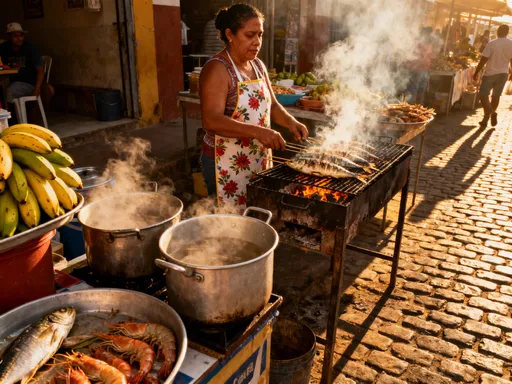
To eat like a local, follow a few simple rules. Visit the morning market, where baskets overflow with lotus stems, banana flowers, and river fish. Sit on a plastic stool at a family-run eatery. Use your hands when appropriate. Ask for extra herbs—they are not garnish but essential. And never rush. Meals in Hoi An are not transactions; they are moments of connection. Even a simple bowl of mì gà (chicken noodle soup) eaten at dawn with fishermen returning from the river carries a quiet dignity.
Beyond the Center: Village Life in Hoi An’s Cultural Backyard
Just beyond the lantern-lit streets of the Ancient Town lies a different rhythm of life. A short bike ride takes you to villages where time moves with the seasons, not the clock. Here, culture is not curated for visitors—it is lived, day by day, in fields, workshops, and family homes.
Tra Que Vegetable Village is one such place. Located along the banks of the Thu Bon River, it has supplied Hoi An’s markets with organic greens for over 200 years. Farmers rise before dawn to tend their plots, using compost made from seaweed harvested at low tide. The fields are a patchwork of mint, basil, morning glory, and perilla, all grown without synthetic fertilizers. I joined a morning harvest, working alongside a farmer named Mr. Hai, who showed me how to cut lettuce without damaging the roots so it would regrow. As we worked, he spoke of his father and grandfather, who farmed the same land. “We grow food,” he said, “but we also grow tradition.”
Another village, Kim Bong, has been a center of woodworking for generations. In family-run workshops, artisans carve intricate furniture, temple doors, and household items using hand tools passed down for decades. Unlike factory-made pieces, Kim Bong woodcraft is made to last—teak and jackfruit wood sanded smooth, joints fitted without nails. Some families still use the same workbenches their ancestors built. I watched a master carver shape a lotus motif into a wooden panel, his chisel moving with precision born of a lifetime. When I asked how long it took, he smiled and said, “Time is not counted here. Only care matters.”
Visiting these villages requires a mindful approach. Come early, dress modestly, and ask before taking photos. Support the community by purchasing directly—buy a bundle of herbs from Tra Que, commission a small carving from Kim Bong. Avoid tour groups that treat villages as photo stops. Instead, choose community-based tours that share profits with locals and limit group sizes. These places are not exhibits—they are homes. When treated with respect, they offer some of the most authentic cultural experiences in Vietnam.
Dressing the Part: The Quiet Elegance of Vietnamese Ao Dai
In recent years, the image of travelers in flowing ao dai—Vietnam’s traditional long tunic—has become synonymous with Hoi An. Photos of women in silk gowns, standing beneath lanterns or riding bicycles through rice fields, flood social media. While some view this as a tourist trend, the ao dai carries deep cultural meaning that extends far beyond the lens.
The ao dai is more than clothing. It is a symbol of grace, identity, and continuity. For generations, Vietnamese women have worn it during Tet (Lunar New Year), weddings, and family gatherings. In schools, some female students still wear white ao dai as uniforms. The garment’s design—fitted bodice, high collar, side slits—reflects both modesty and elegance. Each region has subtle variations, and families often pass down tailoring secrets through the generations.
In Hoi An, the ao dai tradition thrives. The town is home to dozens of family-run tailoring houses, some operating for over 50 years. Many offer custom fittings, allowing visitors to choose fabric, style, and embroidery. But the best experiences go beyond measurement. At one ethical studio, I met a tailor named Mrs. Thao, who explained the history of the ao dai as she pinned the fabric. She spoke of wartime adaptations, French influences, and how the garment evolved to reflect changing times. When I wore the finished ao dai—a soft jade silk with lotus embroidery—I didn’t feel like a performer. I felt connected.
The key is intention. Wearing an ao dai should not be a costume but a gesture of respect. Choose studios that employ local tailors, pay fair wages, and educate clients about the garment’s significance. Avoid mass-produced versions sold as souvenirs. And if you wear it during the Full Moon Festival or a temple visit, do so quietly, without disrupting local customs. When done with care, dressing in an ao dai becomes a form of cultural appreciation, not appropriation.
Traveling with Meaning: How to Respect and Protect Hoi An’s Culture
Hoi An’s beauty is undeniable. But with rising visitor numbers, the town faces real challenges. Overtourism threatens its fragile charm—lanterns are mass-produced overseas, historic homes are converted into souvenir shops, and some cultural practices risk becoming performances for cameras rather than expressions of lived tradition.
The responsibility to protect Hoi An’s heritage does not lie with locals alone. Travelers have a role to play. The first step is awareness. Visit early in the morning or late in the afternoon to avoid peak crowds. Choose walking or cycling over motorized tours. Support family-run restaurants, independent craft workshops, and community-based tourism initiatives. These choices keep money in local hands and reduce strain on infrastructure.
Be mindful of photography. Ask permission before photographing people, especially elders and children. Avoid staging shots that misrepresent daily life—no paying farmers to pose with tools they don’t use, no directing families to “act traditional.” Culture is not a performance. When you enter a temple or home, remove your shoes, speak softly, and follow local customs. These small acts of respect speak louder than any guidebook.
Finally, listen. Talk to locals not just to get directions, but to learn. Ask about their family, their work, their memories of Hoi An. Many older residents speak limited English, but a smile and patience can bridge the gap. When you listen, you move beyond sightseeing. You begin to understand.
Hoi An is not just a destination. It is a living culture, shaped by centuries of resilience, craftsmanship, and community. To visit is a privilege. The most meaningful journeys are not measured in miles or photos, but in moments of connection—lighting a candle for peace, sharing a meal with a fisherman, learning to weave silk from a master. Travel not just widely, but wisely. Let your presence honor the place. And when you leave, carry not just souvenirs, but a deeper respect for the quiet, enduring soul of Vietnam.