What I Discovered About Eating for Immunity — Real Food Combos That Help
You’ve probably heard that your diet affects your immune system, but not all foods work the same — and some combos actually boost protection better together. After years of feeling run down during cold seasons, I dug into how certain everyday foods interact to support natural defenses. It’s not about superfoods or strict rules, but smart, science-backed pairings that make a real difference. Here’s what truly worked for me — and why it might help you too.
The Hidden Problem: Why Getting Sick Often Isn’t Just Bad Luck
Many of us assume that catching a cold every few months is simply part of life — especially during winter. We blame crowded spaces, dry air, or the fact that someone in the office always seems to be sniffling. While exposure to germs plays a role, frequent illness is often less about bad luck and more about the quiet erosion of our body’s defenses over time. The truth is, immunity isn’t something we either have or don’t have. It’s a dynamic, constantly active network that depends on daily support — and one of the most powerful forms of support comes from what we eat.
Most people don’t realize that small, repeated nutritional gaps can weaken immune resilience. For example, consistently skipping iron-rich foods or failing to pair vitamin C with plant-based meals can lead to suboptimal nutrient absorption, even if overall food intake seems adequate. Over time, this subtle imbalance can reduce the body’s ability to produce immune cells efficiently. Symptoms like fatigue, slow wound healing, or recurring sore throats may not signal serious illness, but they do suggest the immune system isn’t operating at full strength.
Immunity isn’t just a single organ or one type of cell. It’s a complex network involving the skin, mucous membranes, lymphatic system, bone marrow, and gut — all working together to identify threats and respond quickly. When nutrition falls short, this network becomes slower and less precise. The good news? Unlike genetic factors or age, diet is something we can influence every day. By making intentional food choices — especially strategic combinations — we can strengthen our body’s natural ability to protect itself without drastic changes or extreme diets.
Immunity 101: How Your Body Actually Defends Itself (Without the Jargon)
To understand how food supports immunity, it helps to know how the body’s defense system works in simple terms. Think of your immune system as a well-trained security team, always on duty. It has two main branches: the innate immune system, which acts like a first responder, and the adaptive immune system, which functions like a specialized investigator. The innate system reacts immediately to invaders — launching inflammation, raising body temperature, and sending white blood cells to the site of infection. The adaptive system takes longer but creates targeted responses, remembering specific pathogens so it can respond faster if they return.
White blood cells, including neutrophils, macrophages, and lymphocytes, are the foot soldiers of this system. They circulate through the bloodstream and tissues, constantly scanning for anything that doesn’t belong. When they detect a threat — whether it’s a virus, bacteria, or damaged cell — they spring into action. This process requires energy and raw materials, which come from the nutrients in our diet. Without sufficient protein, vitamins, and minerals, the body can’t produce enough immune cells or keep them functioning properly.
Inflammation is often seen as a problem, but in the context of immunity, it’s actually a vital signal. It’s the body’s way of saying, “Something’s wrong here — send help.” Acute inflammation, like a fever or a swollen throat, is a sign the immune system is working. Chronic inflammation, on the other hand, can be harmful and is often linked to poor diet, stress, or lack of sleep. Nutrition plays a key role in keeping this balance in check — supporting strong responses when needed while preventing unnecessary, long-term inflammation that can damage healthy tissue.
While factors like sleep, stress management, and physical activity are important, food provides the literal building blocks for immune function. Every immune cell is made from amino acids, fats, and micronutrients derived from food. Vitamins like A, C, D, and E, along with minerals such as zinc, selenium, and iron, are directly involved in immune cell development and communication. This means that what you eat today can influence how well your body fights off a virus next week. The immune system isn’t passive — it’s active every single day, and it needs consistent nourishment to stay strong.
Why Food Combos Matter More Than Single “Super” Ingredients
There’s no shortage of headlines promising miracle cures in a single food — blueberries that fight cancer, turmeric that reduces inflammation, or kale that detoxifies the body. While these foods do contain beneficial compounds, the idea that one ingredient can transform health on its own is misleading. The real power lies not in isolated superfoods, but in how foods work together. This concept, known as food synergy, refers to the way nutrients interact to enhance each other’s absorption, activity, and effectiveness in the body.
For example, vitamin C increases the absorption of non-heme iron — the type found in plant foods like beans, lentils, and spinach. On its own, this form of iron is poorly absorbed. But when eaten with a source of vitamin C, such as citrus fruit or bell peppers, absorption can improve by up to threefold. Similarly, fat-soluble vitamins like A, D, E, and K need dietary fat to be absorbed properly. Eating a salad with raw carrots and spinach is healthy, but adding a drizzle of olive oil helps the body access the full nutritional value of those vegetables.
Research supports the idea that whole dietary patterns — like the Mediterranean or traditional Japanese diets — are more effective at supporting long-term health than focusing on individual nutrients. These diets emphasize variety, balance, and natural food combinations that have evolved over generations. They don’t rely on supplements or exotic ingredients, but on everyday foods eaten in smart pairings. This suggests that the key to strong immunity isn’t chasing the latest superfood trend, but building meals that combine nutrients in ways that support each other.
Another example is the interaction between fiber and polyphenols. Foods rich in polyphenols — such as berries, tea, and dark chocolate — have antioxidant properties that help reduce oxidative stress. But many of these compounds are not well absorbed in the small intestine. When they reach the gut, however, they interact with fiber and are transformed by gut bacteria into active metabolites that the body can use. This means that eating polyphenol-rich foods alongside fiber sources enhances their health benefits. Again, it’s the combination that makes the difference.
The Vitamin C + Iron Power Duo: One of My Game-Changers
One of the most impactful changes I made was learning how to pair plant-based iron sources with vitamin C-rich foods. For years, I struggled with low energy and frequent colds, especially in the winter. My doctor checked my iron levels and found they were on the lower end of normal — not anemic, but not optimal either. I didn’t want to rely on supplements, so I explored how to improve absorption through food. That’s when I discovered the powerful synergy between vitamin C and non-heme iron.
Iron is essential for making hemoglobin, the protein in red blood cells that carries oxygen throughout the body. It’s also crucial for the production and function of immune cells. Without enough iron, the body can’t respond effectively to infections. Plant-based sources of iron — such as lentils, chickpeas, tofu, spinach, and fortified grains — are excellent choices, but they contain non-heme iron, which is less easily absorbed than the heme iron found in meat. However, vitamin C can convert non-heme iron into a more absorbable form in the digestive tract.
I started adding simple pairings to my meals: lentil soup with a side of orange slices, spinach salad with sliced bell peppers and lemon dressing, oatmeal topped with strawberries and pumpkin seeds. Within a few weeks, I noticed a difference — more energy, better focus, and fewer midday crashes. Last winter, I didn’t catch a single cold, which was unusual for me. While I can’t attribute this entirely to one food combo, I believe this change played a significant role in strengthening my defenses.
The science behind this is well established. Studies show that consuming just 100 milligrams of vitamin C — about the amount in one medium orange — with a meal can increase iron absorption by 67%. This is especially important for women of childbearing age, vegetarians, and anyone with increased iron needs. The best part is that these foods are affordable, widely available, and easy to include in everyday meals. You don’t need special recipes or hard-to-find ingredients — just a small shift in how you combine what’s already on your plate.
Fats That Fuel Defense: Pairing Olive Oil with Tomatoes and Greens
Another eye-opening discovery was learning how healthy fats help unlock the protective compounds in vegetables. I used to eat salads with raw tomatoes and spinach, proud of my healthy choices, but I wasn’t getting the full benefits. That changed when I learned that certain nutrients — like lycopene in tomatoes and vitamin K in leafy greens — are fat-soluble, meaning they need fat to be absorbed by the body. Without fat, much of their potential goes to waste.
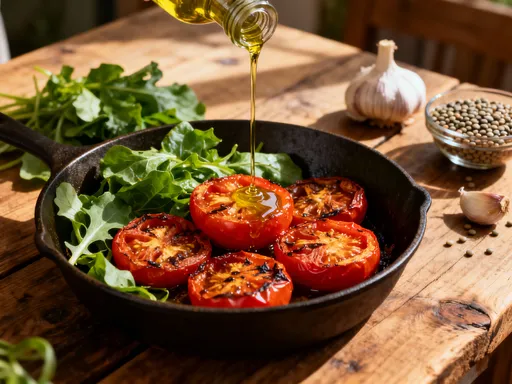
Lycopene, the antioxidant that gives tomatoes their red color, has been linked to reduced inflammation and lower risk of chronic diseases. But raw tomatoes contain lycopene in a form that’s not easily absorbed. Cooking tomatoes — especially with a healthy fat like olive oil — breaks down the cell walls and increases lycopene availability. One study found that cooking tomatoes in oil can increase lycopene absorption by up to four times. This is why traditional dishes like tomato sauce, roasted red peppers, or sautéed greens are not only delicious but also more nutritious than their raw counterparts.
I started making small changes: roasting cherry tomatoes with olive oil and herbs, sautéing kale or Swiss chard with garlic in a teaspoon of olive oil, or drizzling avocado oil over cooked broccoli. I also began adding sliced avocado to salads and using full-fat dressings instead of low-fat versions. Not only did my meals taste better, but I also felt more satisfied after eating. Over time, I noticed fewer afternoon energy slumps and a general sense of feeling more resilient.
The Mediterranean diet, which emphasizes olive oil, vegetables, legumes, and whole grains, has been extensively studied for its health benefits, including stronger immune function and lower rates of infection. One reason for this may be the consistent use of fat to enhance nutrient absorption. This doesn’t mean eating large amounts of oil — just enough to help the body access the vitamins and antioxidants already present in plant foods. It’s a simple, practical strategy that turns ordinary meals into powerful sources of immune support.
Garlic, Onions, and Cruciferous Veggies: The Flavorful Immune Activators
If there’s one group of foods that consistently shows up in immune-supportive diets around the world, it’s the allium and cruciferous vegetables. Garlic, onions, leeks, broccoli, cauliflower, kale, and Brussels sprouts are more than just flavor enhancers — they’re packed with sulfur-containing compounds that play a key role in immune regulation. These compounds support the liver’s detoxification pathways and help activate white blood cells, making them more effective at identifying and eliminating threats.
Allicin, the active compound in garlic, is released when garlic is crushed or chopped. It has antimicrobial and anti-inflammatory properties that may help reduce the severity and duration of colds. Onions contain quercetin, a flavonoid that stabilizes immune cells and may help prevent excessive inflammation. When combined with cruciferous vegetables, which contain sulforaphane, these foods create a synergistic effect that enhances the body’s natural defenses. Sulforaphane, in particular, has been shown to boost the production of antioxidant enzymes that protect cells from damage.
I used to avoid strong flavors, but I’ve come to appreciate how these foods add depth to meals while supporting health. Now, I start many dishes with sautéed onions and garlic as a base. I roast broccoli and cauliflower with olive oil and a sprinkle of onion powder. I add shredded kale to soups and stews, letting it cook slowly to release its nutrients. These aren’t complicated recipes — just simple, consistent habits that make a difference over time.
What I’ve noticed is that when I eat these foods regularly, minor illnesses — like a scratchy throat or mild fatigue — tend to resolve faster. I can’t prove it’s the garlic or broccoli alone, but I do know that my body feels better equipped to handle stress and seasonal changes when these foods are part of my routine. They’re not magic bullets, but they’re powerful allies in a long-term strategy for staying healthy.
Balancing Gut Health: Fermented Foods Meet Fiber-Rich Plants
One of the most important discoveries in recent years is the deep connection between gut health and immunity. Scientists now estimate that about 70% of the immune system resides in the gut, where immune cells interact closely with the trillions of bacteria that live in the digestive tract. These microbes help train the immune system, regulate inflammation, and protect against harmful pathogens. To function properly, they need two things: probiotics, which are beneficial live bacteria, and prebiotics, which are types of fiber that feed those bacteria.
Probiotics are found in fermented foods like plain yogurt, kefir, sauerkraut, kimchi, miso, and kombucha. These foods introduce helpful strains of bacteria into the gut, supporting a balanced microbiome. Prebiotics come from fiber-rich plants such as onions, garlic, leeks, bananas, asparagus, oats, and apples. When probiotics and prebiotics are consumed together, they create a symbiotic effect — often referred to as a synbiotic — that enhances gut health more than either could alone.
I started by adding a small serving of plain Greek yogurt to my breakfast and including more fiber-rich vegetables throughout the day. I experimented with homemade sauerkraut and discovered that a spoonful on a sandwich or in a bowl of soup added tang and satisfaction. I also began cooking with oats more often — not just for breakfast, but in savory dishes like veggie burgers and meatless loaves. Over time, my digestion improved. Bloating decreased, and I felt more regular. I also noticed that I wasn’t as reactive to seasonal changes or minor stressors.
While the gut-immune connection is complex, the takeaway is simple: feeding your gut bacteria with a combination of fermented foods and fiber supports a stronger, more balanced immune response. This isn’t about drastic changes or expensive supplements. It’s about including a variety of plant-based foods and traditional fermented items in daily meals. Consistency matters more than intensity — small, regular doses of these foods can have a cumulative effect on long-term health.
Putting It All Together: Simple, Realistic Eating Patterns That Support Immunity
After years of trial and error, I’ve learned that strong immunity doesn’t come from perfection — it comes from consistency. It’s not about following a strict diet or eliminating entire food groups. It’s about making small, sustainable choices that add up over time. The most effective approach is to build meals around variety, color, and smart pairings that enhance nutrient absorption and immune function.
Aim to include a mix of vegetables in different colors — red peppers, dark leafy greens, orange carrots, purple cabbage — because each provides unique phytonutrients that support different aspects of health. Pair plant-based proteins like beans and lentils with vitamin C-rich vegetables to boost iron absorption. Cook tomatoes and other red-orange vegetables with a small amount of healthy fat to unlock their full antioxidant potential. Add garlic, onions, and cruciferous vegetables to stir-fries, soups, and roasted dishes for their immune-activating compounds. And don’t forget the gut — include fermented foods and fiber-rich plants every day to support the microbiome.
These habits don’t require special knowledge or expensive ingredients. They’re based on real, accessible foods that many of us already have in our kitchens. The key is awareness — understanding how foods work together and making intentional choices that support long-term resilience. No single meal will transform your immune system overnight, but daily decisions shape your body’s ability to defend itself over time.
If you have a medical condition, are pregnant, or take medications, it’s always wise to consult your healthcare provider before making significant changes to your diet. Nutrition is powerful, but it’s one part of a broader picture that includes sleep, stress management, physical activity, and emotional well-being. Still, food is a tool we use multiple times every day — and each choice is an opportunity to strengthen our health from the inside out.
What I’ve discovered is that eating for immunity isn’t about fear or restriction. It’s about empowerment. It’s about choosing foods that make you feel strong, energized, and capable. Small steps today — like adding bell peppers to your lentil stew or drizzling olive oil over roasted vegetables — can build a foundation of resilience that serves you for years to come. Your body is designed to protect you. With the right nourishment, it can do its job even better.